Mera Peak Climbing

From
Booking Tour
Trip Highlights
- Explore the Historical cities; Kathmandu and Bhaktapur.
- Scenic flight to and from Lukla.
- Step inside and experience life as the “mountain people” live in the heart of the Himalayas.
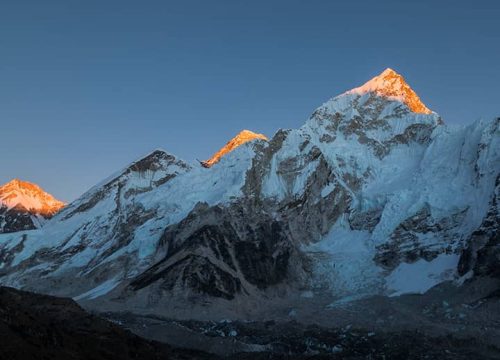
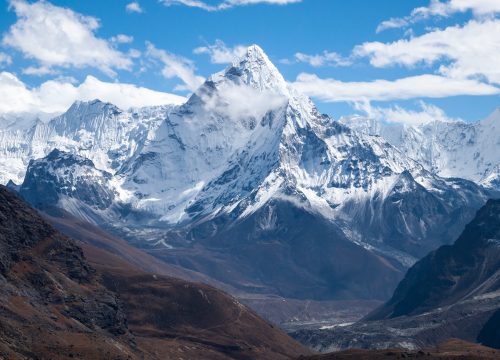
- Remarkable views of Kangchenjunga, Makalu, Everest, Nuptse, Lhotse, Ama Dablam, Cho Oyu, and many other mountains.
- Wonderful staying Experience in a remote region.
- Summit to highest trekking peak, Mera Peak at an elevation of 6,654 meters.
Trip Summary
Mera Peak, one of the most climbable peaks in the world, continues to fascinate the climbers with its easy peak climbing route that you can ever imagine in a mountain. Also, Mera Peak has varied alluring features that will meet the expectations of a climber as well as capture the attention of your mind. It has the reputation of an easy peak, less fatal, and this is what matters to the world. Mera Peak is also a warm-up peak for those who are climbing Mt. Everest.
It seems Mera Peak is for everybody because it is not a technical peak. Its height ascends to 6000 m plus, a height that has to be respected, the required height, as well as the standard elevation that you want to ascend in your life. It is good to have a lifetime experience on this peak, where climbing to the top is always successful. This climbing demands physical fitness from you, after all, you are climbing such an altitude.
The top of Mera Peak is a vantage point, for it shows the view of 8000 m mountains, soaring around us, such as Everest, Makalu, Lhotse, Cho Oyu, and Kanchenjunga, as well as to enjoy the panoramic view of snow-clad mountains that has the best of the best view in the world.
With the world-class climbing guide of Mountain Ascend Treks, you are going to have this, as well as stand on the top of Mera Peak. This is also the guide, who will teach you from scratch, such as how to fix ropes, how to climb up the rocky area, how to walk on a steep edge, must-have climbing equipment, and so on. After all, Mera Peak is a mixed climbing of ice climbing, snow climbing, and rock climbing.
Trip Itinerary
After your arrival at Tribhuwan International Airport, you will find us outside the airport with the banner of Mountain Ascend Treks. If you arrive in the evening or in the middle of the night, we take you straight to the hotel by vehicles, such as cars, vans, depending on the number of passengers. Else, you will be taken to our office, where we will talk about your trip in detail, telling you about do’s and don’ts. If you have some free time in the day, then you can use it to visit the places that are around your hotel, most probably, you will be staying in Thamel, which is a lively town for the tourists. You can also ask any questions related to your trip. If you have made a half-payment to us then you are requested to pay the remaining balance now.
As you come to our office, please bring your passport, which has a validity of 6 months, including three copies of passport-sized photos, and a readable copy of your travel insurance paper. This is followed by the signing of the paper of your trip, as well as the non-liability disclaimer paper.
After breakfast, you will do the combined sightseeing of Kathmandu and Bhaktapur with a city guide. The former is the city of the temple, while the latter is the oldest city of Nepal. These cities have lots of historical monuments, so you will visit these monuments selectively. We have to make a selection because the sightseeing of these cities is half-day. This much time will be enough to visit Kathmandu Durbar Square, Boudhanath, and Changu Narayan Temple in Kathmandu and Bhaktapur. Not only these, but Mountain Ascend Treks will also provide you the option of visiting Pashupatinath Temple, Monkey Temple, and others. In addition to these, Mountain Ascend Treks gives the top-most prioritization to your favorite places. Your visit is important to us, and we always cooperate with you.
From Kathmandu, you fly to Lukla in a small aircraft, called twin otter. Lukla is the gateway to Mt. Everest. There are 18 to 20 flights per day, and the name of the Lukla Airport is Tenzing-Hillary Airport. Only pilots, who have 7 years of experience in aviation, are permitted to fly to Lukla. From there, you head off to the Chutok La pass (2945).
In Case of Flight Delay to Lukla and Kathmandu
Tenzing-Hillary Airport is located at an altitude of 2860 m. It is a hilly airport. It is also surrounded by snow-covered mountains, Lukla has mountain weather. Sometimes, this weather changes unfavorably and causes a flight delay. In such a case, the helicopter will be charted upon your request by Mountain Ascend Treks. The fare per person will vary from a helicopter to helicopter or from company to company. The fare will be roughly between USD 500 to USD 3000. The helicopter has a capacity for 4 to 6 passengers, and it can fly even at the low visibility of 1500 m, while the twin otter flies at the high visibility of 5000 m.
After breakfast, we follow an ascending trekking trail that connects Chutenga with the Zatrawala Pass. Then, we continue walking to Zatrabok and enjoy the spectacular view of mountains, such as Numbur Himal, Kongdi RI, Karyolang peak, and so on. Following this, we follow a descending trekking trail that takes us to Khartitang at 3900 m.
After having breakfast, we follow a descending trekking trail that takes us to juniper and rhododendron forest and ultimately to Kothey.
After having our breakfast, we head towards Tangnang, Sabal Tsho-Lake, and the Hinku valley. The trail is scenic, and we see the breathtaking view of Kusum Kanguru.
Today is an acclimatization day, which means, we have to prepare ourselves for tomorrow’s higher altitudes. Your trekking guide/climbing will provide information on this. Acclimatization also means a resting day. It means a time to give a rest to your legs and heart that have walked uphill and that has beaten. Further, acclimatization also means hiking to the nearby areas.
We climb up along the lateral moraine of the glacier and see the awesome view of Mera Peak.
Today is an acclimatization day, which means, we have to prepare ourselves for tomorrow’s higher altitudes. Your trekking guide/climbing will provide information on this. Acclimatization also means a resting day. It means a time to give a rest to your legs and heart that have walked uphill and that has beaten. Further, acclimatization also means hiking to the nearby areas.
Today we continue to the high camp. We will be blessed with the stunning panoramas of giant mountains rising above 7000m i.e. Chamlang (7290m), Makalu (8475m) and Baruntse (7220m) to the east, Everest (8848m), Lhotse (8501m), and Nuptse to the north and Ama Dablam, Cho Oyo (8153meters) and Kantega to the west
Today, the whole crew wakes up at around 1 a.m. for preparation. The climbers have to wake up around 2.30 am. We have our breakfast and put on crampons and rope. Then we embark on our journey to the summit. It takes around 4-6 hours to reach the summit of Mera. From the summit, we can see the spectacular views of Mt. Everest (8,848m), Cho-Oyu (8,210m), Lhotse (8,516m), Makalu (8,463m), Kanchenjunga (8,586m) Nuptse (7,855m), Chamlang (7,319m), Baruntse (7,129m) Ama Dablam (6,812m) Kangtega (6,779m) and many more. We then retrace our steps down to high camp. After a rest accompanied by some hot soups/tea, we continue down to Khare for the night.
If the weather is unfavorable, we will not be able to summit the Mera Peak on day 12. Day 13 is needed in case we are not able to summit.
We leave the mountains behind and descend to Tangnang and trek along the same trail. At Kothey, we celebrate our success.
We trek back to Zatrabok. The trail offers a magnificent view of alpine vegetation like huge rhododendron forests.
Today we head towards Chutenga. The trail ascends until we reach the Zatrawala Pass and then again descend until we reach Chutenga.
The trekking trail descends to the valley and takes you to the suspension bridges over the Dudh Koshi River and is easy to do, and we will be walking most of the time along the Dudh Kosi River. Later this trail joins with Lukla, from where we catch a return flight to Kathmandu, the city of temples. And it is in Lukla, we feel that we have done the world’s best trek in 14 days.
We catch an early morning flight to Kathmandu. After reaching Kathmandu, we can take a rest or do some souvenir shopping. If you are interested, then Mountain Ascend Treks help you in souvenir shopping. Later in the evening, you will have a farewell dinner in a Nepali restaurant, where you can see Nepali dance. Also, there will be Nepali music and songs. Along with these, there is a lot of tourism activities that you can do in Nepal. Some of these are jungle safari, biking, and mountain flight.
Today is the last day of your trip. We make sure that you reach the Tribhuwan International Airport on time for departure. You will reach the airport approximately 3 hours before your scheduled flight. We will keep in touch with you through emails. Since Nepal is the cheapest tourist destination in the world for any tourism activities, Mountain Ascend Treks is always ready to provide you with service.
Cost Includes
- All airport transfers from arrival to departure
- 18-day adventure, 16 of which include 3 meals a day
- Round-trip airfare between Kathmandu/Ramecchap and Lukla
- All Climbing Gear (Including boots, harness, and helmet)
- 20kg baggage allowance in flight and during trekking
- Porter service
- Airport transfers
- English-speaking, government-licensed Trekking Guide
- English-speaking, government-licensed Climbing Guide
- Climbing permit for Mera peak.
- All applicable trekking and climbing permits
- 3 nights’ accommodation in Kathmandu on B&B plan
- Government taxes, entrance fee, equipment fee, and other applicable fees
- First aid kit
- Trip certificate
- Farewell dinner
- Mountain Ascend Treks t-shirt
Cost Excludes
- Lunch and dinner in Kathmandu.
- Travel insurance which covers emergency rescue and evacuation.
- International airfare and airport departure tax.
- Nepal entry visa- You can obtain the visa easily upon your arrival at Tribhuvan International Airport in Kathmandu (Tourist Visa with Multiple Entries for 15 days can be obtained by paying $25 or equivalent foreign currency. Similarly, Tourist Visa with Multiple Entries for 30 days and 90 days can be obtained by paying $40 and $100 respectively. Please bring 2 copies of passport size photos).
- Alcoholic, hot and cold drinks.
- Personal trekking equipment.
- Tips for trekking staff and drivers (you will absolutely want to show your gratitude to your sherpas and porters).
- Any other expenses that are not mentioned in the ‘Price Includes’ section).
FAQ
Why Choose Mountain Ascends Trek ?
We have an experienced team of guides on the mountain and great ground staff in Kathmandu to make sure you are well taken care of from the moment you arrive. You can always contact us 24/7 on our international helpline and all of our support team rotates through Nepal on a seasonal basis so you can be sure you are getting knowledgeable first hand advice.
All of our guides work for us full time and have on average 8+ year’s experience trekking in the Himalayas. We are one of the few companies in Nepal to get a Wilderness First Aid Certification for all of our trekking guides. Our guides have also attended a special course dealing with acclimatization issues on the mountain . (meet the team)
Where is Annapurna Base Camp located?
Annapurna Base Camp is located in Kaski District of Gandaki Province in Nepal. The Annapurna Base Camp is around 81 kilometers north of Pokhara. You can either take a bus from Pokhara to Kimchi and then start walking to Annapurna Base Camp, or hire a jeep and drive to Ghandruk and begin your Annapurna Base Camp expedition.
Is Annapurna Base Camp Trek open?
Yes! After the Covid-19 pandemic faded throughout Nepal, the Annapurna Base Camp Trek is finally open to travelers. During Nepal’s lockdown, the trek was closed, leading to a decline in tourism. However, many tourists can now go to Annapurna Base Camp Trek.
Is Annapurna Base Camp safe?
The trek to Annapurna Base Camp is significantly safer than the Annapurna Mountains, which are quite risky. It is one of the most pleasant and enjoyable journeys that anyone can undertake in terms of altitudes, duration, adventure, and challenges.
How much does it cost to trek to Annapurna Base Camp?
Depending on the package, route, operator, and facility you choose, the Annapurna Base Camp Trek might cost anywhere from $400 to $700 per person. The Annapurna Base Camp Trek is one of Nepal’s most affordable treks, offering amazing adventure and once-in-a-lifetime opportunities.
WHO CAN GO? Are there any age limits for Annapurna Base Camp Trekking?
There’s no age limit for trekking to Annapurna Base Camp, as long as trekkers are physically fit and determined! We have had families with kids as young as 7 years do the Annapurna Base Camp Trek and our eldest trekkers have been in their late 70s as well. However, children under the age of seven and seniors over the age of 70 are not suggested to do Annapurna Base Camp Trek due to the high altitudes and prolonged journey duration.
What permits are required for Annapurna Base Camp Trek?
ACAP (Annapurna Conservation Area Permit) and TIMS (Trekkers Information Management System) cards are the mandatory permits required for trekking in the Annapurna Region. Both of these cards are available through the Nepal Tourism Board in Kathmandu or Pokhara. These permits can be obtained for less than 50 USD.
PAYMENTS & EXTRA COSTS When I pay the remainder of the money on arrival in Kathmandu, how do you take that money? US cash or credit card?
We accept all major currencies. You can pay the balance in cash or with a credit card. Please note we charge a 13% fee for credit card payments so it’s much better to pay your balance in cash.
Can I use credit cards in the places I visit while trekking?
Generally, most places in Nepal don’t take credit cards so they are of limited use. There are ATMs in Kathmandu and you can get a good exchange rate withdrawing rupees. The ATMS in Kathmandu generally charge a $5 USD service fee in addition to any charges that you might incur from your bank. These ATMs also often have a limit of 25,000 rupees per day (about $215 USD).
What extra costs can I expect?
Our trekking packages are pretty much all inclusive from the time you arrive in Nepal. We generally suggest you plan on about $300 or $400 for extra expenses including tips. Extra expenses include items such as: Your Nepal Visa, sleeping bag or down jacket rental, showers, Wifi, snacks and charging electrical devices at tea houses along the way. We also suggest you plan on having extra funds available in cash or on a credit card in case your flight to Lukla is canceled and you decide to charter a helicopter.
What about extra hotel nights?
We can arrange extra hotel nights for you in Kathmandu before or after the trek at additional cost. Please let us know before you arrive in Nepal so we can make the arrangements as required. (Read our blog post.)
PHYSICAL FITNESS How difficult is trekking?
Trekking in the Everest Region is challenging, but it is a challenge which most people can rise to with some training and determination. The trek consists of 5 to 8 hours of walking a day. In general, we start trekking around 8 am and reach the destination for the day around 4 pm.
How fast do you go on the trek?
We encourage everyone in the group to keep a slow pace at our pre-trek briefings. It’s about enjoying the mountains and not a race to the next tea house. The head guide will normally stay at the back of the group with the slowest trekkers.
What is the Best Fitness Program to Prepare?
In terms of physical conditioning before the trek, it’s best if you can do some cardio related workouts like running and distance walking. It’s ideal if you can take the time to go on a few weekend hikes around your area too. We have a training guide for Everest Base Camp on our website that may have just the information you’re looking for. https://www.mountainascendtreks.com/secure-yourself/
https://www.mountainascendtreks.com/travel-basics/
https://www.mountainascendtreks.com/be-a-pro-traveller/
What physical criteria will ensure I'm fit enough to trek?
Those with acute or chronic health conditions impacting their stamina, range of motion, coordination, or balance may have difficulty completing the trek. If you are in doubt about your own physical readiness, consult a physician well in advance of booking your trip
PREPARATION & PACKING What are the next steps once I pay the deposit?
Once you have paid the deposit the next step is for you to send us a scan or photo of your passport along with arrival flight details. We can’t book your Lukla flight or get your trekking permit until we have the photo or scan of your passport so please send this to us as soon as possible .
What type of insurance should I have? Where can I obtain a policy?
Travel insurance is mandatory and obtaining it for the days you are trekking is your responsibility. Please email us your proof of insurance before arriving for the trek.
Do you rent sleeping bags or down jackets?
We can provide a -20C sleeping bag for a $20 rental fee during the trek and down jackets are $15 USD. These will be available at the briefing the night before your flight to Lukla and you can just let the team know that you need one.
What about the duffel bag for the porters?
We will provide a duffel bag for you in Kathmandu. The duffel bag will be carried by the porters on the trek and will be your luggage item on the flight. Often the porters get ahead on the trail and your duffel will not be available until you reach the tea house in the evening so you will need to carry a day pack while hiking with the items you need during the day.
How big should my day pack be?
Generally, we recommend a day pack of about 40 L, or roughly the size of a school backpack to hold your extra layers as well as essentials for the day.
What about weight limits?
The main limitation on the weight is the luggage limit on the flight from Kathmandu to Lukla which is 10kg (22lbs) and another 5kg (11lbs) for a carry-on for a total of 15Kg or 33lbs.
What should I do with passports, medications and valuables?
Make sure to keep all of the items in your carry on during the flight. You don’t want to be without important documents or medication if your luggage is delayed for some reason. You should carry these in your day pack on the trek as well.
Can I leave luggage in Kathmandu during the trek?
Yes, you can leave any luggage at the hotel during the trek.
Is there a possibility of getting separate rooms for the trip? If so, how much extra will this cost?
We can arrange a private room in Kathmandu. In some of the villages on the trek, it may be possible to have a private room (no extra cost) and we will do our best to arrange that. However, during busy times of the year there is a limited amount of lodging available in some of the villages so it’s generally impossible to arrange private rooms. This is the case even if you’re willing to pay extra since the tea house owners will not give out a private room if it means someone else goes without a room.
Where will our drinking water come from?
We provide all the meals on the trek, but don’t provide water. The best option is to treat the local water either with chlorine/iodine tablets or to use a steri pen. The tea houses will give you good quality free water and you can also get along the trail but you will need to treat it. If you are using the tablets make sure they dissolve completely (about 30 mins). On most treks you can buy mineral water along the trail. A liter of mineral water at lower elevation tea houses costs around $1 USD but at higher elevations can cost up to $4 so the cost can add up.
What kind of meals are offered on the trek?
We let trekkers choose a meal and hot drink from the menus at the tea houses. Typical meals include; omelets, toast, boiled eggs, noodle soup, fried rice, macaroni, momo, vegetarian curries, pizza or chow mein. The traditional Nepali Dal Bhat which consists of rice, lentils, and a vegetable is all you can eat and always a good choice. Meat on the mountain is not hygienic and we suggest trekkers stick with vegetarian options.
Can you accommodate vegetarian or other special diets?
This is not a problem and in fact we recommend that everyone stick with a vegetarian diet on the trek as the local meat is not refrigerated properly. If you have special dietary requirements just let us know and we will make sure to assist with the proper menu.
Can I charge electric devices on the trek?
They have electricity at the tea houses in the common areas. They do charge an extra fee of $1 to $4 an hour for charging.
What type of adapter might I need?
A lot of the tea houses have the power strips with the American outlets. If not then either a C or D type outlet is good. You can check out all the details on the different outlets If you have time in Kathmandu you can buy at least the common adapters for just a couple of dollars.
What about wifi or phone calls?
Some of the lower elevation tea houses offer wi-fi for an extra charge of $3 to $10. Another option is to get a Nepalese SIM card in Kathmandu for both internet and calls. Even if you have a SIM card data use is mainly limited to lower elevation tea houses. You can also use your guide’s phone for international calls as long as you reimburse him for the charges which tend to be fairly reasonable.
What are the Toilet facilities in the tea house/guesthouse?
Most of the tea houses have western style flush toilets and cold running water. In almost all cases the bathrooms are shared and not attached to the individual rooms. Some of the higher elevation tea houses have the Asian style toilets which consists of a ceramic basin on the ground
HEALTH AND SAFETY What about acclimatization and altitude?
The best way to avoid problems with altitude is to ascend slowly and all of our Everest treks are designed to average about 300m or 1000ft a day in elevation gain which helps to minimize any elevation problems and is the rate recommended by high altitude doctors. For a complete list of symptoms please review our Welcome to Nepal Brochure. All of the guides are well experienced at recognizing symptoms related to AMD and each carries a pulse oximeter and will monitor your blood oxygen level on a regular basis.
What about sun protection?
It may seem counterintuitive, but your skin is in more danger of sun damage on the mountains than while at the beach! The sun’s intensity increases dramatically as we rise in altitude, and fresh snow reflects exponentially more UV rays than does the sand. You will need to protect your skin with clothing and sunblock. A sunblock specifically for mountain conditions is recommended. If you wear prescription eyeglasses it’s recommended that you get your prescription fitted to sunglasses. It’s best to wear a hat and cover up while trekking.
What happens if I get sick or injured while trekking?
We take all possible precautions to proactively ensure the safety and wellness of our trekkers, but rest assured that our guides are trained and experienced in dealing with emergencies. If necessary, your guide will utilize your travel insurance information to call a rescue helicopter, and you will be flown to Kathmandu for medical attention.
What happens if I have symptoms of altitude sickness on the trek?
Having minor symptoms of altitude sickness such as a headache are quite common and you can continue trekking. However, if you develop additional symptoms it’s critical that you don’t continue trekking to a higher elevation. We can often arrange to have you walk down to a lower elevation and wait several days for the symptoms to resolve before continuing with the next group. Note that additional charges apply for extra days on the trek.
If I am sick can I continue the trek next day after a day of rest?
If you are sick and need to rest for a day we can often place you in the next trekking group coming up the mountain. We would rather see trekkers take extra time on the trail then risk altitude sickness by pushing themselves too fast. Please talk to your guide about this and we will do our best to accommodate you.
What safety measures are in place?
All of our guides are certified by the Red Cross and also have an international WAFA certification. Wilderness Advanced First Aid is comprehensive medical training designed for remote professionals or wilderness leaders who venture into remote and challenging environments. Our guides are all equipped with pulse oximeters and in addition to keeping a close watch of your condition they will take daily readings of your blood oxygen saturation levels. In addition our guides carry a basic first aid kit and have a mobile phone. In an emergency situation the guide will coordinate rescue efforts with the office in Kathmandu where our team is available 24/7.
How cold does it get on the trek?
Temperatures vary quite a bit in the Everest Region depending on the season. Temperatures in Lukla at the start of the trek are actually quite warm from March to May and from September to November and trekkers often wear t-shirts and shorts. Everest Base Camp is cold year round and even during the warmer months you can expect lows at night below freezing. During the winter months it can reach -25C or colder at night and it’s important to have warm clothes and a good sleeping bag. Our packing list for Everest Base Camp should have you well prepared for even the coldest months
What sort of footwear is recommended?
Comfortable, sturdy trekking shoes or boots are a must. Look for shoes with ankle support, and ideally your footwear will have Gore-Tex or similar lining, along with thick soles. This will ensure that your feet stay warm and dry, and that you are comfortable walking on rocky paths. It’s always best to break your boots in before you arrive and make sure they are comfortable. If you start to get a blister it’s best to stop immediately and cover it with duct tape or moleskin.
Is the food and water in Nepal safe?
All of the water in Nepal needs to be treated before drinking. If you want to avoid treating the water you can buy bottled water on the trek or in Kathmandu. Whether trekking or in Kathmandu its best to avoid uncooked vegetables. To be on the safe side make sure all your meals are cooked and avoid meat on the mountain.
How much money should I bring along?
Our treks are all-inclusive and cover accommodation, food, park fees, permits, and many other costs, as a means of making your adventure as stress-free and convenient as possible.. Travelers generally bring a small amount of pocket money to cover bottled water, snacks, or tea beyond your included meals, souvenirs, tips, or donations to monasteries along the route (if you are inclined to give one). Trekkers find that around $15 to $20 USD a day is reasonable for these extras although if you’re on a tight budget you can get by with less.
Do you have any extra charges for solo travelers?
We don’t have extra fees for solo travelers who join an existing group. However, if you are the only one who signs up for a departure date we do charge an extra $20 per/day as a porter fee. If an extra fee applies our team will let you know about the extra fee before you book or the extra charge will be added automatically when you book the trek online. If additional guests do sign up and join your trek this fee will be waived when you arrive in Nepal.
Can I get a refund if I don't finish the trek?
It’s sometimes the case that trekkers finish ahead of schedule or they end up stopping the trek early for health or personal reasons. If this is the case please understand that we do not offer any refunds for unused days on the trek. Please understand that our costs are the same as we have an obligation to pay our guides and porters for the time they have committed.
Can I add extra days to my trekking trip?
This is certainly possible if you have arranged a private trek with us. If you are doing a group trek please ask us in advance on how this might be arranged and we will do our best to find a good solution.
Who else is in my trekking group?
If you’re concerned about the number of people signing up for a group or have questions about the other trekkers in the group please ask us. We never share personal data but we can give you a general idea on nationalities, sex and approximate age ranges.
I would like to extend my holiday, any recommendations?
If you have extra days after the trek please ask our ground team in Kathmandu for assistance with arranging day tours around the city. We also organize short 3 day trips to Chitwan for safari.
Ask us a Question
Altitude
6,654 m
Trip Level
Extreme
Best Season
March, April, May, September, October, November
Route
Kathmandu - Lukla - Zatrawala Pass - Tangnang - Khare - Mera Peak - Khothey - Lukla - Kathmandu